Why Proxyware CPO Sarah Ralston Joined the Child Safe Tech Alliance Board of Directors—and What She Wants Parents to Know
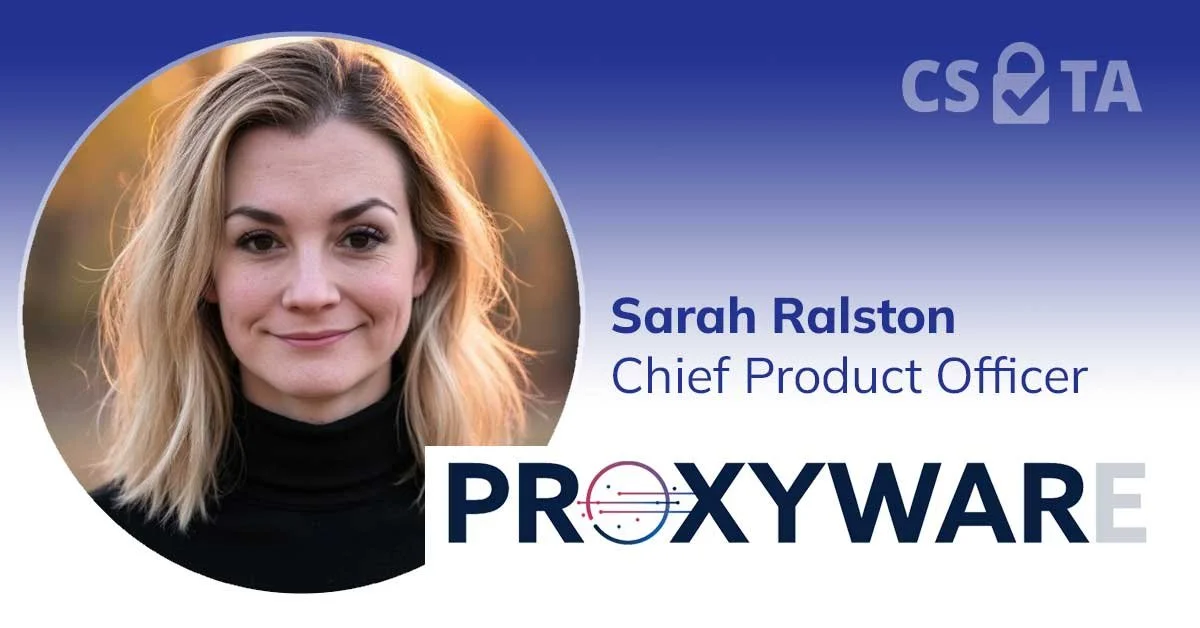
When Sarah Ralston talks about child-safe technology, she isn’t speaking in abstractions or policy jargon. She’s speaking as someone who has spent years inside the systems that power today’s digital world — and who understands, firsthand, how easily those systems can be misused when children are involved - especially considering she is mother to 5 boys.
“This mission is personal for me as a parent, to help other parents protect their children, after seeing how the internet has impacted my kids.”
Now joining the board of the Child Safe Tech Alliance, Ralston brings a clear message she believes every parent deserves to hear: the technology our kids interact with daily is far more complex, persuasive, and risky than most adults realize — and the responsibility to protect children cannot rest on parents alone.
“These systems were never designed with kids in mind”
From social platforms and gaming ecosystems to AI-powered tools embedded in homework, chat, and search, Ralston has seen how modern technology is optimized — not for child development, but for engagement, data collection, and scale.
“Parents assume there are guardrails,” she often explains. “But many of the systems kids are using were designed for adults, then lightly adjusted for younger users — if adjusted at all.”
Her work in privacy, product operations, and cybersecurity has given her visibility into how data flows behind the scenes, how easily personal information can be inferred, and how bad actors exploit open systems. For children, she says, that combination is especially dangerous.
The risks parents don’t see — but kids face every day
Ralston emphasizes that today’s threats aren’t limited to explicit content or obvious predators. The risks are quieter, more sophisticated, and often invisible:
AI tools that confidently provide misinformation or inappropriate guidance
Scams and grooming tactics that look like games, homework help, or peer interaction
Platforms that collect behavioral data long before a child understands consent
Algorithmic feeds that shape self-image, attention, and decision-making
“Kids don’t have the context adults do,” Ralston notes. “They don’t know when they’re being manipulated, tracked, or nudged toward harmful behavior — and that’s not a failure on their part. It’s a design failure.”
Why parents can’t solve this alone
One of Ralston’s strongest beliefs — and a core reason she joined the Child Safe Tech Alliance — is that placing the full burden of online safety on parents is unrealistic and unfair.
“No parent can audit an algorithm or reverse-engineer an AI system,” she says. “We shouldn’t expect them to.”
Instead, she advocates for child-first design standards, clearer accountability for technology providers, and policies that reflect how kids actually use technology today — not how lawmakers imagined the internet decades ago.
Her experience building and evaluating technology solutions gives her a practical lens: safety must be built into systems from the start, not added as an afterthought or left to parental controls that are easy to bypass.
What Sarah wants parents to ask — and demand
Ralston encourages parents to shift from feeling overwhelmed to feeling empowered by asking better questions:
Who built this technology, and for whom?
What data is being collected about my child — and why?
What happens when my child encounters something harmful?
Are safety features real protections or just checkboxes?
She also believes parents should demand more transparency from schools, platforms, and policymakers — and support organizations working to raise the baseline for child safety across the tech ecosystem.
A child-first future starts with honesty
For Ralston, joining the Child Safe Tech Alliance isn’t about fear-mongering or banning technology. It’s about honesty.
“Technology isn’t going away,” she says. “Our responsibility is to make sure it grows up alongside our kids — not at their expense.”
Her voice on the board brings something essential: a deep understanding of how modern tech works, paired with empathy for families navigating a system they never asked to manage alone. That combination, she believes, is what will move child safety from intention to reality.